From 400 UNI to Endless Points: How Airdrops Changed Crypto
Airdrops once surprised early users. Then came the roles, the snapshots, the seasons and the points. The history is a fight over who deserves the tokens.


- 2014: Auroracoin offers every Icelander the same 31.8 AUR
- 2020: Uniswap hands 400 UNI to any address that ever touched it, failed transactions included
- 2023: Hyperliquid puts a live points counter in front of a reward with no announced value
- 2026: Jupiter proposes returning a 700 million JUP airdrop to the treasury
In September 2020, Uniswap made 400 UNI claimable by every address that had ever called its contracts. That included roughly 12,000 addresses whose only interaction had been a failed transaction. You did not have to be a successful user. You had to have been there.
That version of the airdrop is easy to miss now: a product looking backward and rewarding a relationship that already existed.
The later version looked forward. There was a points balance to watch, a season to finish, perhaps a community credential to collect along the way. Hyperliquid's points programme ran in seasons with recurring distributions, referral bonuses and criteria that changed as it went. By 2026, Backpack's launch allocation combined a points system with an NFT community in a single distribution table.
The change was bigger than a different eligibility formula. Once people expected rewards, the possibility of a future token became a reason to use a product in the first place, and the record you left behind became something to curate.
The history of airdrops is a running argument about what counts as contribution, and who gets to decide after the contribution has already happened.
What an airdrop actually gives away
An airdrop distributes tokens to a selected group instead of selling that allocation to them. Selection might depend on past usage, an existing holding, technical work or a campaign's rules. Projects use the mechanism to distribute governance, attract users and encourage participation, and whether recipients stay active afterwards is a separate question. A 2024 study of airdrop design by Messias, Yaish and Livshits carries the title "Giving Money Away Is Harder Than It Seems", which is a fair summary of the next twelve years.
The token is not automatically equity, a dividend or a claim on revenue. Its rights depend on its design. ENS describes its token as a governance instrument. EIGEN was introduced for a staking and security role. The same distribution method can deliver very different assets.
Several other things also travel under the airdrop label when they should not.
Staking rewards. A network paying its stakers is ordinary protocol economics. A separate project later allocating tokens to those same stakers is a different decision by a different party, and neither promise implies the other.
Purchase access. Eligibility to buy tokens at a launch price is not a free allocation. Sui's community programme was exactly this, and it was still widely discussed as an airdrop.
Participation NFTs. A badge that records you were at the testnet is a record. It is not a contract that another asset will arrive.
"Free." Usually means no purchase price for the distributed tokens. It does not erase earlier gas, time spent, capital exposure or the chance that nothing valuable ever arrives.
2014 to 2018: distributing a currency, then distributing a promotion
An early landmark was Auroracoin. On 25 March 2014 it opened a distribution to eligible Icelanders, with an initial allocation of 31.8 AUR per person. Its ambition was unusually literal: get a cryptocurrency into the hands of an entire population. It belongs in the origin story, although calling any single project the first airdrop oversimplifies a messy period.
Later the same logic became useful to token marketing. A project could compensate promotional work with tokens instead of paying an advertising bill.
The SEC's 2018 Tomahawk case preserves a particularly clear example. The regulator said the project had issued tokens through a bounty programme in exchange for online promotion, even though its attempted token sale raised no money. That was an enforcement action, not a description of every early giveaway. But it documents the exchange at the heart of the bounty era: attention now, tokens in return.
The contrast between those two models matters for everything that follows. One tried to create a currency's user base. The other paid people to help a token find an audience. Both could be described as distribution. They were buying different things.
2020: the retroactive reward changes the expectation
Uniswap's announcement on 16 September 2020 allocated a slice of the initial supply to historical users, liquidity providers and holders of its SOCKS token, based on a snapshot taken at the start of that month. The baseline user grant was simple enough to become a meme in its own right.
Those are Uniswap Labs' own figures from the announcement. What made them significant was not the size. An ordinary product interaction had become evidence for a later token grant, and that made the past newly interesting.
The problem with a successful surprise is that it teaches people to expect another one. A project could now attract activity without announcing any reward at all, simply because participants had seen the pattern before. The 2024 airdrop study identifies that expectation as part of the incentive landscape, including activity on platforms that had not yet distributed a token.
The question shifted from whether a product was useful to whether using it might also leave the right record.
2021 onward: identity, membership and staking become evidence
ENS showed that the valuable record did not have to be trading activity. Its November 2021 distribution went to anyone who held an ENS name at a snapshot on 31 October 2021. A naming relationship had become governance-token eligibility.
Staking supplied another kind of record. Rather than asking only whether an address had tried an application, a project could look at participation in an existing network's security.
Celestia's Genesis Drop in September 2023 shows how these categories could sit side by side. It allocated 60 million TIA across public-goods developers and researchers, active users of Ethereum rollups, and stakers and relayers on Cosmos Hub and Osmosis. The announcement invited 7,579 developers and 576,653 onchain addresses. Those were eligibility figures, not a count of people who claimed.
That is a different concept of "early". Someone could qualify because they had helped a neighbouring ecosystem, not because they had clicked the new project's interface first.
It also explains the appeal and the limit of the staking meta. Existing participation could be reused as a signal for new distributions, so one position could be farmed by several projects at once. But the original holding still carried its own risks, and another project's allocation remained that project's separate decision. Staking rewards and an outside airdrop were never the same promise.
2021 to 2023: the community CV
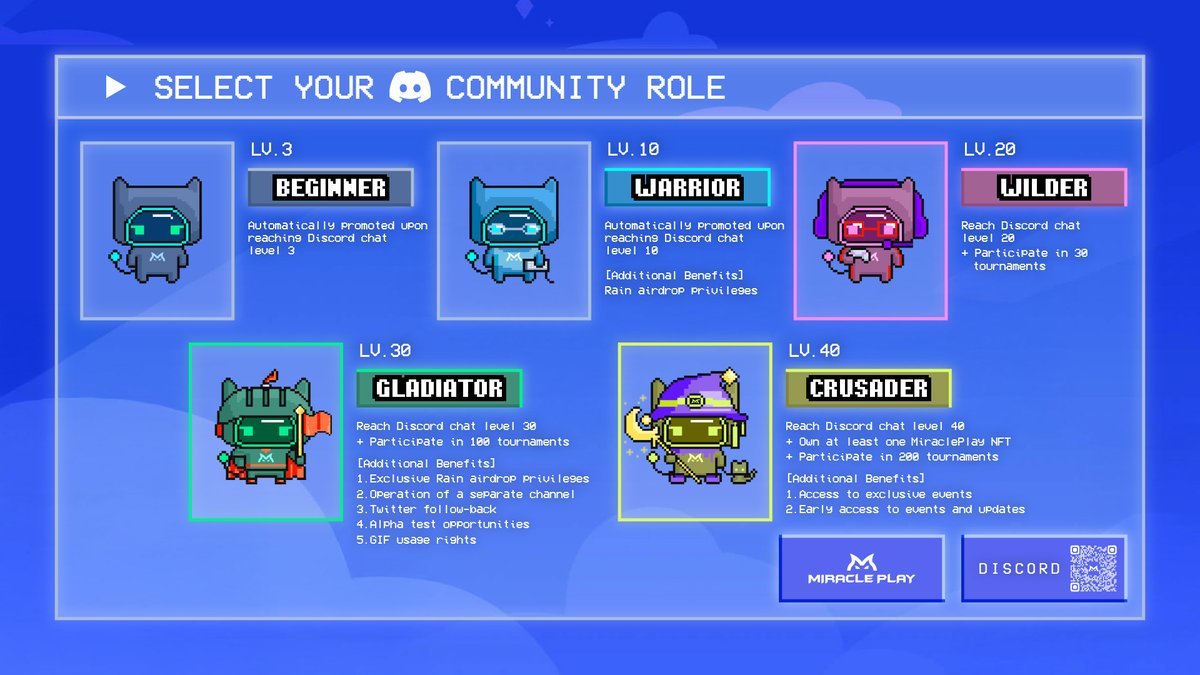
Eligibility also acquired an offchain side. A Discord role could identify an early member, a contributor or someone who finished a campaign. An NFT or badge could record another piece of participation. These are signals, not interchangeable proof that a person is valuable, or that a token is owed.
The useful version was real work: testing software, reporting problems, writing documentation, helping a community function. Sui's December 2022 programme explicitly distinguished developer grants, validator support, ambassador work and education.
The cultural version was a CV assembled for a future reviewer. An OG role here, a participation NFT there, evidence that you had not just arrived yesterday. Crypto Twitter built a vocabulary around it: farming, grinding, being "early", and the recurring lament of the person who did everything right and still got nothing.
Aptos made the testnet-and-NFT connection tangible in October 2022. WIRED reported that eligibility routes included an application connected to network stress testing and minting a commemorative NFT. It also documented people who believed they qualified but could not claim, and the project's temporary Discord restrictions to hold back scammers during the launch.
The counterexample matters just as much. Sui's Community Access Program was designed to let community members purchase tokens. Access was never the same thing as an airdrop.
OG role: recognition inside a community. It says you were around. It does not say you are owed anything.
Allowlist: often purchase access, at a set price, in a set window. The right to buy is not a grant.
Testnet participation: testing. Some projects later rewarded it. Many did not, and none were obliged to.
Airdrop: a completed allocation of tokens under published criteria. Until the criteria and the claim exist, the other three are evidence, not entitlement.
That distinction gets lost when "testnet", "allowlist", "OG role" and "airdrop" are treated as four words for the same future payment. They are not.
NFTs: when the membership card became the eligibility check
ApeCoin's March 2022 distribution tied allocations to the Yuga Labs NFT ecosystem, with the richest qualifying combinations receiving up to 10,950 APE according to CoinGecko's later study. It made the holder-based model impossible to ignore.
The appeal was easy to understand. An NFT collection already identified a group. A new distribution could acknowledge that group without reconstructing years of app usage.
It also created a tempting interpretation: perhaps the collectible was not only a collectible, but a route to future assets. That reading spread well beyond Yuga, and for a stretch of the 2021 to 2022 NFT market a possible future airdrop was a routine part of the case for holding a collection.
The economics did not change to match. Any earlier purchase price, holding risk and expectations about future benefits still belonged in the calculation. A token grant does not retroactively make an expensive membership free. Nor does one successful distribution establish an obligation to repeat it.
This model did not disappear when points arrived. Backpack's 2026 allocation to Mad Lads holders is a later example of NFT membership and activity-based rewards being used together, and we return to it below.
2022 to 2023: the wallet history becomes a scorecard
Optimism opened its first OP claims on 31 May 2022. Arbitrum followed with its user distribution in March 2023. Between them they carried retroactive distribution across Ethereum's scaling ecosystem, and they changed its shape.
Arbitrum's published criteria considered several dimensions of activity, including how long an address had been active, how many transactions it had made and how much value it had moved. The user allocation totalled 1.162 billion ARB, and the published distribution table ran from 625 to 10,250 ARB depending on points scored.
These were not simply bigger versions of one flat grant. They were attempts to distinguish kinds of participation, and to pay more for some than for others.
That creates an obvious incentive problem. Once a behaviour is rewarded, people have a reason to reproduce the behaviour. But the record cannot always explain the motive. A repeat transaction can reflect actual use, reward-seeking or both, and the chain records them identically.
A public blockchain supplies evidence that an action happened. It does not supply evidence that the action mattered.
2023 to 2024: points make the anticipation visible
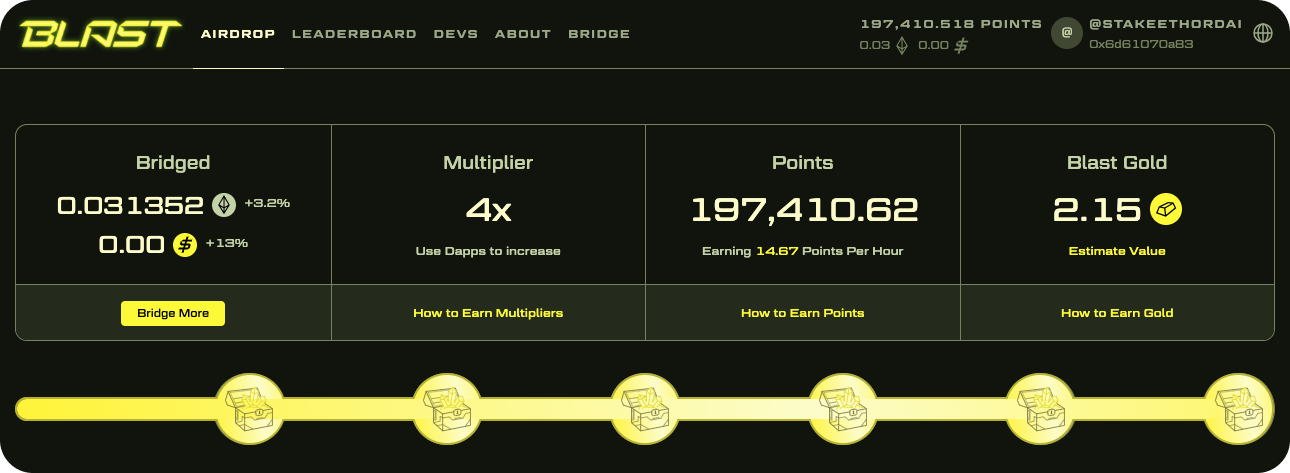
Points changed the experience by putting a visible counter in front of an uncertain future reward.
Blur's early distribution joined an NFT marketplace's incentive system to a token launch. Its documentation allocated 360 million BLUR, or 12% of supply, to the initial claim and reserved further community tokens for later incentives. This was a continuing programme, not a farewell gift to historical users.
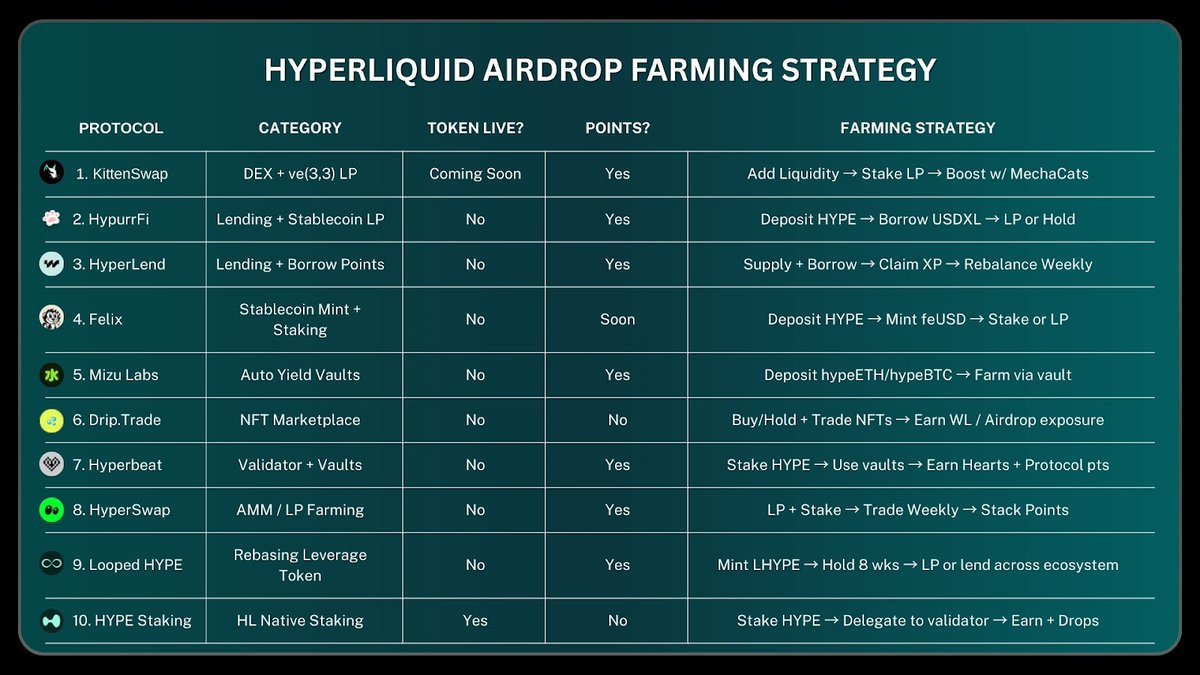
Hyperliquid's points documentation is the cleanest record of the seasonal format. The first phase began on 1 November 2023 and ran for six months with a fixed weekly pool. A second phase ran from late May to November 2024. Criteria were "updated on a recurring basis", affiliates earned a share of their referrals' points, and the document still states that Hyperliquid "reserves the right to modify previous point distributions under its sole discretion". The $HYPE token that followed became the meta's best-known success story, which is a separate matter from whether the format is fair.
The attraction of a counter is psychological as well as financial. It makes participation visible before the reward has a settled value. A growing balance feels like progress even when the conversion rate is unknown.
A point is a unit in a scoring system, not necessarily a token and certainly not a dollar.
Consider a deliberately simplified example. A campaign reserves 100,000 tokens and divides them proportionally among one million eligible points. A participant holding 1,000 points receives 100 tokens. If the eligible total doubles while that participant's score stays the same, the allocation falls to 50.
The balance did not go backward. Its share did.
Real programmes add tiers, caps, multipliers, exclusions and separate pools, so that is an illustration rather than a formula. It shows why a large score, on its own, says very little about the eventual payment, and why every points season ends with the same argument about dilution.
The capital-and-time branch
EigenLayer's 2024 stakedrop brought a different emphasis. Its published methodology considered the amount committed, how long it stayed, how early it arrived and whether the stake was maintained, and it had to work through the complexity of liquid restaking tokens that sat between the staker and the protocol.
That is structurally different from recognising a helpful Discord contributor. It measures commitment mainly through capital and time.
The distinction matters for fairness. A system weighted toward capital answers a different question from one weighted toward technical work or community participation. Neither should be advertised as though it measures every kind of contribution equally.
It matters for liquidity too. EIGEN was initially non-transferable. Receiving an allocation did not mean receiving anything you could sell.
The other side learns the rules too
An airdrop faces a Sybil problem: one participant presenting many identities to collect benefits intended for many people. The 2024 airdrop study documents both the detection challenge and LayerZero's approach that year, which asked Sybil operators to self-report in exchange for a reduced allocation rather than none.
But a reward-seeker and a fake identity are not the same category. Someone can openly participate because rewards exist without pretending to be several people. Selling an allocation on day one does not, on its own, prove dishonesty either.
The design problem is harder than "remove the farmers". Projects need a defensible line between permitted incentive-seeking and prohibited manipulation, and they need a way to handle their own mistakes.
Strict filters exclude legitimate participants. Weak filters reward imitation. Vague rules leave the project with discretion while everyone else carries the uncertainty.
The scoreboard does not remove judgement. It moves judgement into the formula and the exceptions.
2024 to 2025: the reward moves onto the phone and the feed
Not every campaign demanded onchain capital. The tap-to-earn branch made repeated consumer activity the eligible behaviour. Hamster Kombat's September 2024 distribution connected a Telegram game, daily tasks and referrals to a token allocation, according to Binance Academy's summary. Its scale of participation should not be confused with proof of durable earnings for the people tapping.
InfoFi shifted the valuable input again, from application activity toward online attention.
Kaito's February 2025 airdrop rewarded participants in its Yaps system, which scored crypto discussion on X for reach and engagement. The Block reported a fully diluted valuation of $1.9 billion the day after claims opened. We have covered what happened to that model after X changed its rules, so the short version here is that it was the bounty era of 2018 returned in a more elaborate interface: help produce attention, receive a score, and potentially receive tokens.
A network might value capital. A testnet might value technical feedback. A marketing campaign might value reach. Calling all three "community rewards" does not make the inputs, costs or outcomes equivalent.
Where the airdrop meta stands in 2026
There is no single replacement for the old models. The more revealing development is that projects are combining them, or asking whether another distribution serves the people already holding the token.
Points and NFTs are now parts of one allocation
Backpack's documentation says its completed launch distribution sent 240 million BP to points holders and 10 million to Mad Lads NFT holders, a quarter of total supply between them. Later user releases are tied to company milestones.
This is a useful answer to the claim that each meta kills the one before it. Points did not replace holding. Activity and membership were assigned separate portions of the same table.
Whether that combination produces lasting loyalty is not something the allocation table can establish.
The supply argument has collided with the reward argument
Jupiter's net-zero-emissions proposal of 13 February 2026 put the conflict into unusually plain language. It proposed to "postpone Jupuary for the foreseeable future, returning all 700M tokens to the Community Cold Multisig to be used at a future date", while keeping the snapshot for a possible later decision. To the people who had planned around the airdrop it offered this: "If you were looking forward to Jupuary, we understand the frustration."
Jupuary is Jupiter's name for the January airdrop to users of its Solana trading aggregator, a recurring event since the JUP token launched in January 2024.
The 2026 edition was meant to be the last one, according to the community thread cited below. That is what made the proposal to postpone it land so hard: it was not cancelling a habit, it was reopening a settled promise.
That is a proposal document, not proof of the final outcome. A community thread in May 2026 described the distribution as postponed following the vote and argued for reopening it, calling the situation "a DAO vote that was canceled by another DAO vote". That is evidence of a continuing dispute, not an official resumption.
The disagreement matters regardless of who wins it. A user waiting for compensation and a holder worried about new supply can both call themselves the community while wanting opposite outcomes.
Once the activity has already happened, changing the reward also raises a trust question. Protecting the token's economics does not settle the obligation that participants believe the project created.
Social rewards met platform limits
On 15 January 2026, X announced restrictions on apps that rewarded posting and said it had revoked their API access. Kaito said it would wind down Yaps and its incentivised leaderboards in favour of a different model.
The later evidence is more specific than "InfoFi died". Galxe retired Starboard on 3 August 2026, and its notice said "all data is now frozen" while Quest, Passport, Loyalty Points and its other products carried on, with resources moving toward acquisition, retention, credentials and identity.
One kind of attention leaderboard stopped. Other ways to establish participation remained.
Reward budgets are being asked harder questions
The shift was visible going into the year. Eigen Foundation's December 2025 proposal argued for an incentives committee that would direct emissions toward ecosystem growth and fee revenue rather than broadly subsidising stake. It was a proposed direction, not evidence that every part has been implemented.
Optimism's Season 9 announcement in January 2026 paused Retro Funding, stating that the programme "will not run for at least the next 12 months". Retro Funding pays for public goods and should not be confused with a user airdrop. Its relevance is the budget question: even an established token-incentive programme can be reassessed rather than repeated by default.
Taken together, these are a change in emphasis, not a completed transition. Distribution is being asked to justify what it buys after the campaign ends.
The big payouts were real. The usual retelling is incomplete.
Some allocations were substantial. But three numbers routinely get mixed together: the tokens allocated, their market value at one chosen moment, and the money somebody actually realised.
| Distribution | Allocation | Headline dollar figure | What that figure is not |
|---|---|---|---|
| Uniswap, 2020 | 400 UNI baseline per address | About $17,152 at the $42.88 benchmark CoinGecko used | A launch-day cash payment. UNI traded far lower when claims opened. |
| ApeCoin, 2022 | Up to 10,950 APE for the richest NFT combinations | Around $259,000 at CoinGecko's peak-price benchmark | A typical recipient's profit. Most holders qualified for far less. |
| Arbitrum, 2023 | 625 to 10,250 ARB by points tier | None published by the foundation | Proceeds. Those depended on whether, when and how each recipient sold. |
| Kaito, 2025 | Scored by Yaps; about 70% of claimants got under 50 tokens | $1.9 billion fully diluted valuation | Money paid to creators. FDV prices the whole supply at the day's rate. |
Sources: the Uniswap and Arbitrum allocation documents, CoinGecko's historical study and The Block's Kaito claim data.
CoinGecko's frequently cited ranking needs particular care. Its page carries an April 2026 update, but the underlying study covers distributions through December 2023 and values them at historical peak prices. It is not a current ranking of cash paid to users.
There are also reports of real exits. In February 2025, The Block, citing Arkham, reported that the trader Ansem sold a KAITO allocation worth roughly $230,000. The same article reported that about 70% of claimants in its snapshot received fewer than 50 tokens. Both observations describe one distribution at one moment, not a universal earnings rate.
A large recipient makes an excellent screenshot. The screenshot does not say how many people received nothing, how much participants spent beforehand, or what their time was worth.
Sources were checked on 11 September 2026. Project documentation establishes stated rules and allocations, not audited participant profitability or long-term retention.
The Auroracoin site is a historical reference rather than a contemporaneous announcement. The May 2026 Jupiter thread is a community account, not a vote record. CoinGecko's valuations are historical peak-price illustrations, not live quotes. ENS's own documentation states, in capitals, that "THERE ARE NO PLANS FOR ANOTHER AIRDROP": a familiar name on a claim notice is not evidence that the project issued it.
This entry will be updated if Jupiter's DAO reaches a final decision on Jupuary, or if a major programme named here changes its published rules.
What comes next?
The likely direction is not one universal new meta. It is a more complicated negotiation over evidence.
- More targeted allocations. Separate pools for developers, existing users, infrastructure contributors and established communities. Celestia's mixed eligibility and Backpack's points-plus-NFT table already show how that is designed. The forecast is that more projects draw those distinctions, not that either has proved the model.
- More attention to what happens after the grant. Repeat usage and work that stays useful after the incentives stop would be more persuasive evidence than a temporary rise in the rewarded metric. Releasing rewards later may encourage continuity, but it also shifts risk and waiting onto recipients. That is not automatically fairer.
- Identity and privacy staying in tension. Stronger evidence that participants are distinct people reduces some manipulation. Linking more accounts and behaviour also increases what a reward operator learns about someone. The better design question is how much evidence is necessary, not how much can be collected.
- Surprises alongside seasons. Retroactive distributions may continue, because their appeal is precisely that they look back at activity nobody performed for a scoreboard. The difficulty is that an ecosystem fluent in airdrops can anticipate a reward even when nobody has promised one.
The best possible outcome is not the disappearance of incentives. It is clearer commitments, useful work receiving fair recognition, and products people still use when the counter stops moving.
An airdrop can distribute a token. It cannot airdrop a reason to stay.
More in The Degen Almanac
fomo Built the Feed for the Memecoin Machine
fomo turns public wallets, leaderboards and referrals into a single scroll. Its rise shows the next memecoin fight is over discovery, not creation.

How $TOAD Turned an Argentine Cartoon Into Solana Lore
A 1988 Argentine children's toad really does predate Pepe the Frog. What a Solana crowd built on top of that in a fortnight is the better story.
BitMart's "Orderly" Shutdown Has Become a Fight Over User Funds
BitMart calls its closure an orderly wind-down. Users want withdrawals, liabilities, and usable reserves disclosed. Here is what the evidence actually shows.