How $TOAD Turned an Argentine Cartoon Into Solana Lore
A 1988 Argentine children's toad really does predate Pepe the Frog. What a Solana crowd built on top of that in a fortnight is the better story.
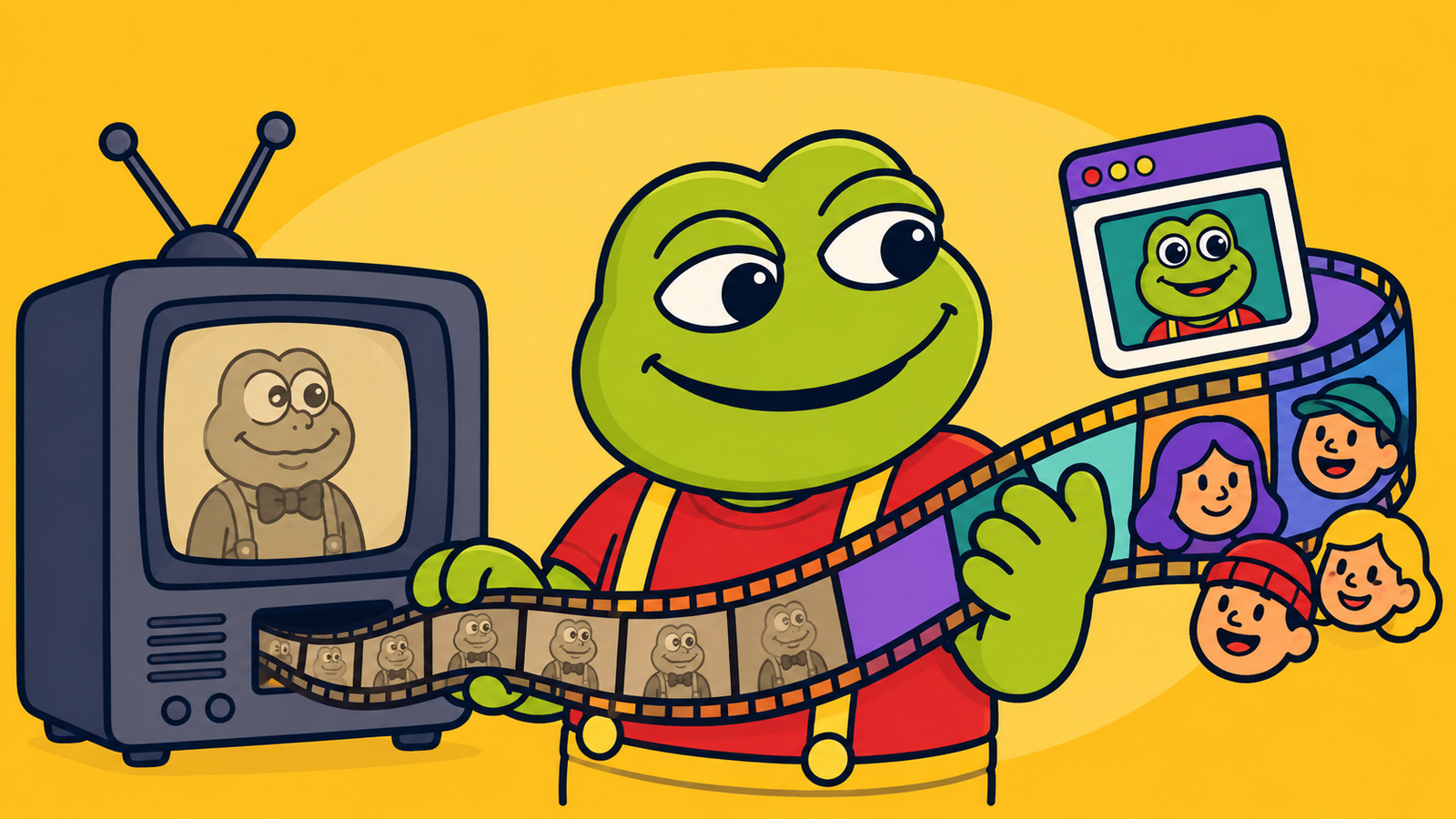
- 1988: a green toad called Pepe sings on Argentine television
- 2005: a design studio draws the version everyone knows
- 2013: a cartoon upload turns it into a global childhood anthem
- 2026: a Solana token claims all three at once
Most memecoins have to invent their lore. $TOAD inherited nearly four decades of it, and then compressed the whole thing into one word: first.
The pitch is that an Argentine children's character called El Sapo Pepe beat Matt Furie's frog by seventeen years, which makes this the original Pepe finally collecting its due. It is a genuinely good story, and unusually for this genre, most of the load-bearing parts are real.
They are also not quite the parts being repeated. So it is worth spending two sections on what the record actually holds, and then getting to the more interesting question, which is what a crowd has done with it in a fortnight.
The toad really was there in 1988
In 1988 the Argentine singer and presenter Analía García, working as Candela, wrote a children's song called El Sapo Pepe and performed it on Súper Súper, the ATC programme she hosted. La Nación reports that she built the character against type, to argue with the way children's stories usually cast toads as something to fear.
That settles the only chronological question anybody is actually asking. A character named Pepe the Toad existed years before Pepe the Frog.
What it does not settle is which toad. The story that travels with the token collapses three separate artefacts into one image that supposedly sat unchanged since the Reagan administration.
- 1988. The song, and a green creature on Súper Súper that looked little like the mascot anyone would recognise today.
- 2005. Sergio Strauch, producer and husband of the performer Adriana Szusterman, commissions a design studio to draw the Sapo Pepe that became standard, and registers the trademark on it. By then García and Szusterman were years into a fight over the song, the drawing and the name, with more than twenty performers touring their own versions.
- 2013. El Reino Infantil uploads an animated version, now past 946 million views, and the toad stops being Argentine. The project points at this video as the source of the exact toad on its coin.
Which produces an awkward result for the pitch. The red shirt and yellow suspenders on the token are not the 1988 creature. They are the 2005 commission as animated in 2013, and that is also the version somebody else holds a trademark on.


What "first" cannot prove
The remaining claim is the one that would actually matter, and it has been tested.
In 2018, attorneys for Infowars, defending a copyright suit Matt Furie had brought over poster sales, argued that Pepe the Frog might be an unauthorised derivative work of a "pre-existing, strikingly similar" Argentine character. In May 2019, Judge Michael Fitzgerald refused to throw the case out, saying Infowars had produced no evidence rebutting Furie's account that he had never heard of El Sapo Pepe. Infowars settled for $15,000.
So the safe version is narrower than the slogan, and it is the version nobody has a commercial reason to print: El Sapo Pepe predates Pepe the Frog, and is not established as its source.
Chronology is not genealogy. Two green amphibians sharing a first name make an excellent side by side. They do not make a family tree.
Which is where this stops being an archive problem and starts being a memecoin one. A crowd did not turn up for a footnote about Argentine children's television. It turned up for a word, and the word was worth more than the footnote.
The token arrived with its headline already written
The Solana contract is A13oRB9FFaiUjfi6LdCg6p9ka1u8SfGkUFs4SKvPpump, launched through Pump.fun. Its earliest liquidity pair was created on 8 August 2026 at 13:59 UTC, which is the first hard timestamp in the token's life. Exchange desks writing it up afterwards dated the launch to 9 August, when it started moving. Those are two different events and the distinction is the whole reason a token can be called new twice.
The launch text offered no team and no roadmap. It said the deployer would not run the coin, and invited other people to conduct a community takeover. That reframes what happened six days later: the takeover was not an emergency handover. It was the operating model, announced in advance.
Those figures come from CoinGecko and the DEX Screener pair data at 17:29 UTC on 21 August 2026, and the last one needs a footnote, because single-pool screenshots have been circulating as though they were the whole picture. Liquidity is spread across fifteen pairs where $TOAD is the base asset, and the deepest Meteora pool holds roughly a quarter of the total. A screenshot of that pool is not the token's liquidity.
The first two weeks then delivered an entire memecoin cycle in miniature.
- 8 August. First liquidity pair created. A pair is not an audience.
- 10 August. KuCoin lists the token on Alpha, its higher-risk venue, warning in the same notice that tokens there "may carry higher risks, including significant price volatility and potential loss of capital".
- 11 August. Price peaks near $0.023, valuing the supply at roughly $22m. Nothing about the history was verified that day.
- 13 August. A Moonshot verification starts circulating. What that covers is worth its own section.
- 14 August. A community claims the DEX Screener profile, and the current channels replace the original ones.
- 21 August. Roughly 69% below the peak, with volume still in the millions and trackers putting holders somewhere near 19,500.
The numbers say the token is still active and unusually visible for something under a fortnight old. They say nothing at all about the claim that gave it an identity.
"Verified" verifies one thing
Two badges arrived in the first week, and neither one means what the reposts imply.
Take the Moonshot verification first, with a caveat: it has been circulating since 13 August, but no Moonshot post confirming it turned up in the material reviewed here, so treat it as claimed rather than confirmed. What matters more is what the badge covers even when it is real.
Moonshot's own documentation describes verification as a submitted and reviewed identity check. A project applies, links are matched to a contract, a reviewer decides. Moonshot has been blunt in public about the limits, posting that it "does not have a 'vote' to get verified" and takes "no payment of any kind to verify a project". What the badge tells a user is that this contract is the one the project claims. In a field where a good ticker attracts a dozen duplicates, that is a genuine service. It is not a statement about 1988, about Furie, or about permission from anybody in Argentina.
Platform verification matches a contract to a project's stated links. It says nothing about whether the project's statements are true.
Automated contract checks report that mint and freeze authorities are disabled and that inspected liquidity is locked. They read code. They cannot tell you who owns a story or whether artwork is licensed.
An Alpha listing is a venue decision, and KuCoin's own wording files it under higher risk.
Even supply needs care. The project describes a fixed one billion. Trackers show roughly 960.6 million issued against a coded maximum of one billion. Those are close, and they are not interchangeable.
A crowd has formed. Its control map has not.
What the first two weeks produced is a good deal more than chart posts, and that deserves saying before the caveats arrive.
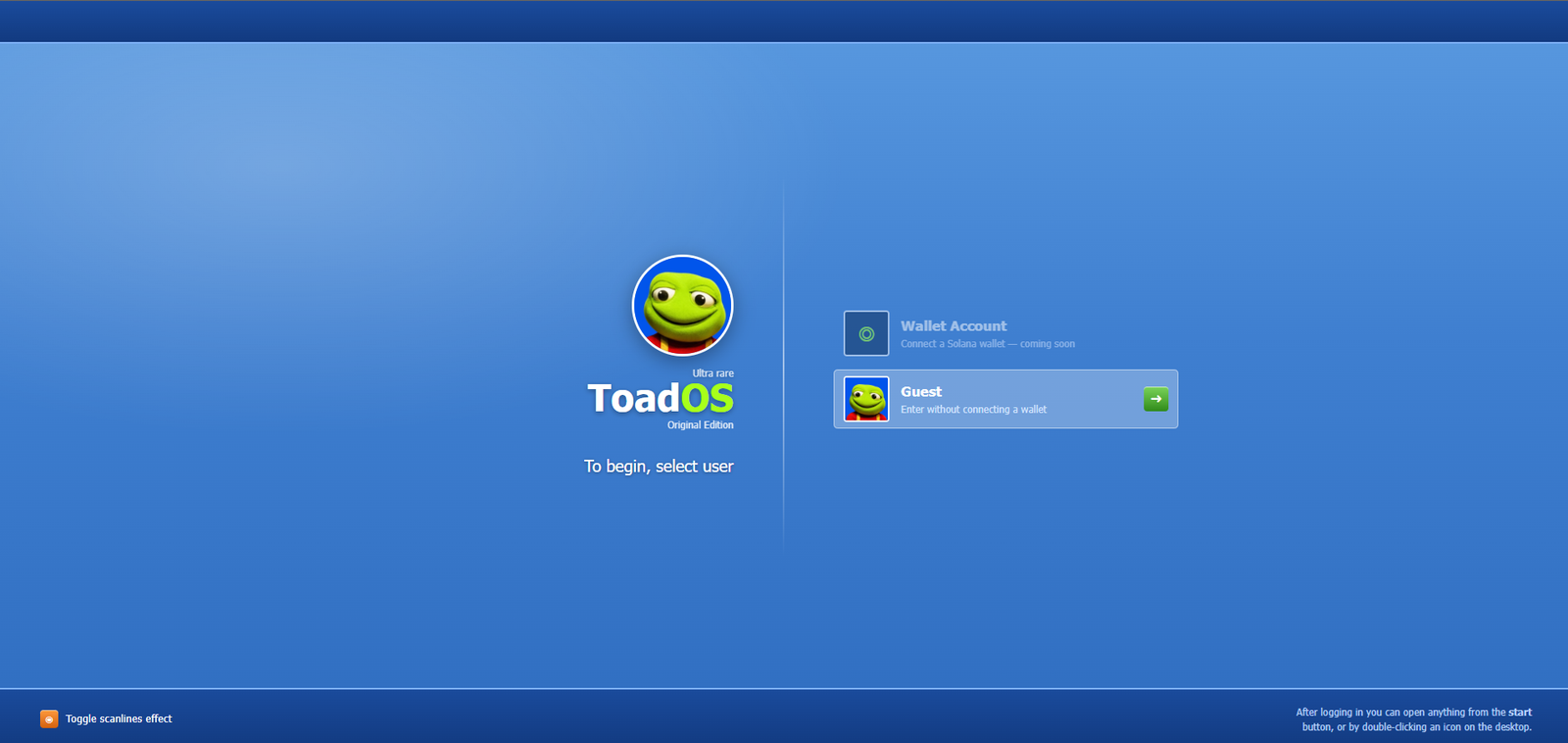
There is an art contest with visible submissions, a Telegram group, an X community, and community-built trackers carrying holder statistics, an airdrop tracker and a distributor leaderboard. The tracker site names its builder and says outright that it is not affiliated with the team. There is also a website that is genuinely a piece of production work: thetoadmeme.com boots into ToadOS, a retro desktop with a scanlines toggle, a guest login, working icons and a Solana wallet option marked coming soon. None of that establishes utility. All of it is people making things.
The token also acquired a recognisable patron. Mike Dudas of 6th Man Ventures was given $TOAD by the community, bought a little more, promoted it, and said he would not sell, using the position instead to push the narrative, an approach he credited to Ansem. That is a distribution engine, and it is one of the main reasons anybody outside Solana heard about a 1988 Argentine toad this month. It does not make him a founder or a controller, and he has not claimed to be either.
What has not been produced is a map of who controls what. Two major trackers cannot agree on which account is official: DEX Screener lists @thetoadmeme_ alongside thetoadmeme.com, while CoinGecko still points at @eltoadpepe. Three domains are live. That is not evidence of bad faith. It is evidence that "community-owned" has not yet been given an operational meaning.
The public material does not answer any of this:
- who holds the current and the original X accounts, and which one is canonical;
- who owns the live domains;
- whether a treasury exists, and who signs for it;
- who paid for the contest, the sites and the listings;
- what actually changed hands on 14 August;
- whether anyone has approached García's side, or the current rights holders, at all.
A community takeover can mean control of a DEX profile. It can mean volunteers replacing an absent deployer. It can also become a comfortable label for a small group running a token's public identity without ever publishing how decisions get made. For $TOAD, the available material does not distinguish between those, and the crowd that produced real first-week artefacts has not yet produced a constitution.
So, was it really the first Pepe?
It depends entirely on which sentence is being tested, which is exactly why the slogan works and the history does not fit on a badge.
- Confirmed. Analía García created an Argentine children's song and character called El Sapo Pepe in 1988, and it predates Furie's Pepe by roughly seventeen years.
- Not supported. That the red shirt and yellow suspenders existed in 1988. That design dates to 2005.
- Not supported. That the character debuted on Carlitos Balá's programme.
- Not established. That Furie copied, referenced or knew about any of it.
- Confirmed by the project itself. The token is not affiliated with or endorsed by the rights holders of the character it is named for.
The older toad is real. The clean story is not, and that is the more interesting finding.
$TOAD is a working demonstration of how crypto turns history into a competitive asset. A contested archive becomes a slogan. A shared first name becomes a claim of precedence. A children's song written to make toads less frightening becomes the thing that separates one frog token from several thousand others.
Proving that something called El Sapo Pepe existed in 1988 was the easy act. The harder one is keeping the complicated version of the history legible now that the simple version is trading.

Arc Chain Explained: Circle Wants to Build the Rails, Not Just the Dollar
Circle already supplies USDC. Arc is its bid to build more of the infrastructure around those dollars, with open applications, selected validators, and a token proposal that needs careful reading.
The $65 Million Blokyz NFT Raffle That Took Over X
More than 25,000 ETH queued for 7,500 Blokyz NFTs worth 225 ETH. Most of it was refundable, and the queue itself became the product everyone could see.

fomo Built the Feed for the Memecoin Machine
fomo turns public wallets, leaderboards and referrals into a single scroll. Its rise shows the next memecoin fight is over discovery, not creation.