InfoFi Paid Crypto to Talk. Then X Changed the Rules.
InfoFi promised to reward useful crypto voices. Then X revoked the API underneath the whole model, and four businesses had to become something else.


On 15 January 2026, X stopped allowing apps that paid people to post.
The reasoning was not subtle. X product lead Nikita Bier said the category had produced a "tremendous amount of AI slop & reply spam", and that the decision had already been executed: "We have revoked API access from these apps, so your X experience should start improving soon (once the bots realize they're not getting paid anymore)."
For an industry built on rewarding posts, the platform supplying the audience had rewritten the terms of the business overnight.
Stopping the story there would miss the more interesting half.
- December 2024: Yaps data goes public and mindshare becomes a number
- February 2025: the KAITO airdrop turns posting scores into a claimable token
- January 2026: X revokes API access for apps that pay people to post
- August 2026: the last of the big open leaderboards closes
On 29 July 2026, Kaito announced a rebuilt reward product called Katalyst. On 3 August, Galxe shut down Starboard. One recognisable InfoFi business was introducing a new payment model in the same fortnight another was retiring its attention leaderboard.
That is a better place to start than declaring the model dead or triumphantly back. What actually happened is that crypto tried to turn useful conversation into a measurable, payable activity, and then discovered how hard it is to tell contribution apart from people getting very good at the scoring system.
What InfoFi actually meant
InfoFi is short for information finance. In the version that became a Crypto Twitter meta, platforms measured attention and influence, then used those measurements to organise discovery, campaigns and rewards. A post became a score. A score helped determine a share of a project's token distribution.
The central word was mindshare: how much of the tracked conversation a person or project captured.
Mindshare was never a measurement of the internet. It was a measurement of a particular dataset, weighted by a particular platform's definition of valuable engagement.
Different products used different inputs and arrived at different answers about the same week. Kaito, Cookie and Galxe each ran their own scoring, so a creator could rank highly on one and barely register on another.
A high score meant a platform's model rated you highly. It did not establish that anything you wrote was true.
The basic relationship was straightforward. A project wanted people to understand and discuss it. Creators produced content. A platform assessed that content and its audience. Campaign rules then decided who qualified.
None of that was a wage. A points balance, an eventual token allocation and the money someone actually received were three different things, and the gap between them is where most of the later argument lived.
The novelty was not that influence had economic value. It was the attempt to make that value visible, rankable and available to people who were not already receiving private marketing deals.
The feed had acquired a scoreboard.
When it became the meta
The clearest breakout arrived on 20 February 2025, when KAITO airdrop claims opened on Base. Posting scores stopped being numbers attached to a hypothetical future event. Eligible participants could claim an actual token.
A day later, The Block reported a fully diluted valuation of $1.9 billion, alongside the distribution data that would define the argument for the next year.
Those are The Block's figures for 21 February 2025, drawn from Dune. The valuation prices the entire supply at the prevailing rate, which is not $1.9 billion of circulating tokens and certainly not $1.9 billion paid to creators.
By May there were recognisable variations. Wallchain was promoting Quacks. Cookie3 announced Snaps as the successor to an earlier creator-affiliate network, which is a useful reminder that the underlying business of connecting projects with creators predated the fashionable label.
The appeal was understandable on both sides. To a creator, the pitch was access: a good explanation might earn recognition without an agency introduction. To a project, it was measurable distribution: a marketing budget might reach past the same familiar accounts.
Neither desire was silly. Both depended on a system that could separate genuine contribution from activity produced to satisfy the system.
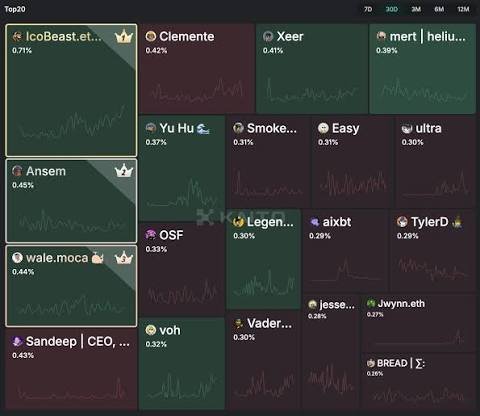
Yaps, Snaps, Quacks, and the attention experiment
The scoring designs were more ambitious than "post a lot". Each platform tried to weigh reputation and originality alongside volume, and each published rules against gaming.
Cookie's farming policy is the most legible example. It ruled out "posting the same content repeatedly, flooding hashtags, tagging projects dozens times in a week", warned that "if you're copying someone else's work or reposting old content without context or relevance, we'll know", and said posts designed only to harvest engagement would be deprioritised.
There were real people behind those dashboards. In its Spark case study, covering 22 May to 26 June 2025, Cookie3 says it onboarded "17,000+ new snappers onboarded in < 5 weeks", with activity across English, Chinese, Turkish, Vietnamese and Korean communities.
Local-language explainers are genuinely valuable work, and paying the people who do it is not a problem. But the same case study reports "8,200% mindshare growth vs. baseline" and "30+ days of positive sentiment dominance", and that is where the reasoning gets slippery. A campaign provider reporting an 8,200% rise in mindshare is describing the output of the campaign it was paid to run. It is not evidence that an independent crowd reached a favourable conclusion.
Then there was LOUD, the 2025 experiment that made the whole relationship explicit. It distributed 45% of supply through what it called an Initial Attention Offering, and carried a 4% fee intended to "fund post-TGE mindshare rewards in perpetuity".
The loop was easy to follow: attention encouraged trading, trading generated fees, fees paid for more attention.
It came apart at the seam you would expect. Delphi Digital found that liquidity providers "immediately undercut the 4% fee pool" that was supposed to fund the rewards, and that the token "failed to spark substantive dialogue, and incentive dynamics masked signal in favor of slop".
Paying for discussion never created an independent reason for anyone to keep caring about the thing being discussed.
Why people turned against it before X intervened
The backlash did not begin in January 2026. It began before the airdrop that started the boom.
The uncomfortable part was never that participants were fake. Delphi's line about LOUD identified something harder: "poorly designed incentive structures can cause humans to behave like bots".
That distinction matters, because a timeline does not need to be automated to become exhausting. A real person with a real account learns that a particular kind of upbeat project explanation performs well. Repeating the format is rational. When enough people make the same calculation independently, the feed goes flat without anybody creating a fake identity.
AI made producing the text cheaper. Incentives supplied the reason. Quality scoring then had to keep pace with a rising supply of content engineered to pass the quality score.
The platforms knew. Kaito founder Yu Hu later described the arms race in plain terms: "Over the past year, we experimented with tighter eligibility, higher threshold in leaderboards, social + onchain filters and different incentive designs. However, issues of low quality and spam largely remained across the broader crypto space."
Underneath the spam problem sat a measurement problem nobody solved. A reputation-weighted score can recognise an established audience. It cannot establish that a claim is true, or that a reader would have encountered it without the payment attached.
Picture the loop from the project's side. It pays for visibility. More favourable posts appear. Its measured share of discussion rises. That rise is then presented as evidence of demand.
Every step can be accurate and the conclusion still wrong, because the dashboard is measuring the campaign, not the market's opinion of the product.
That is what made InfoFi culturally uncomfortable rather than merely annoying. It produced a feed in which enthusiasm, compensated work, competitive positioning and sincere research looked identical. The problem was not that nobody meant what they wrote. It was that a high score could not settle the question either way.
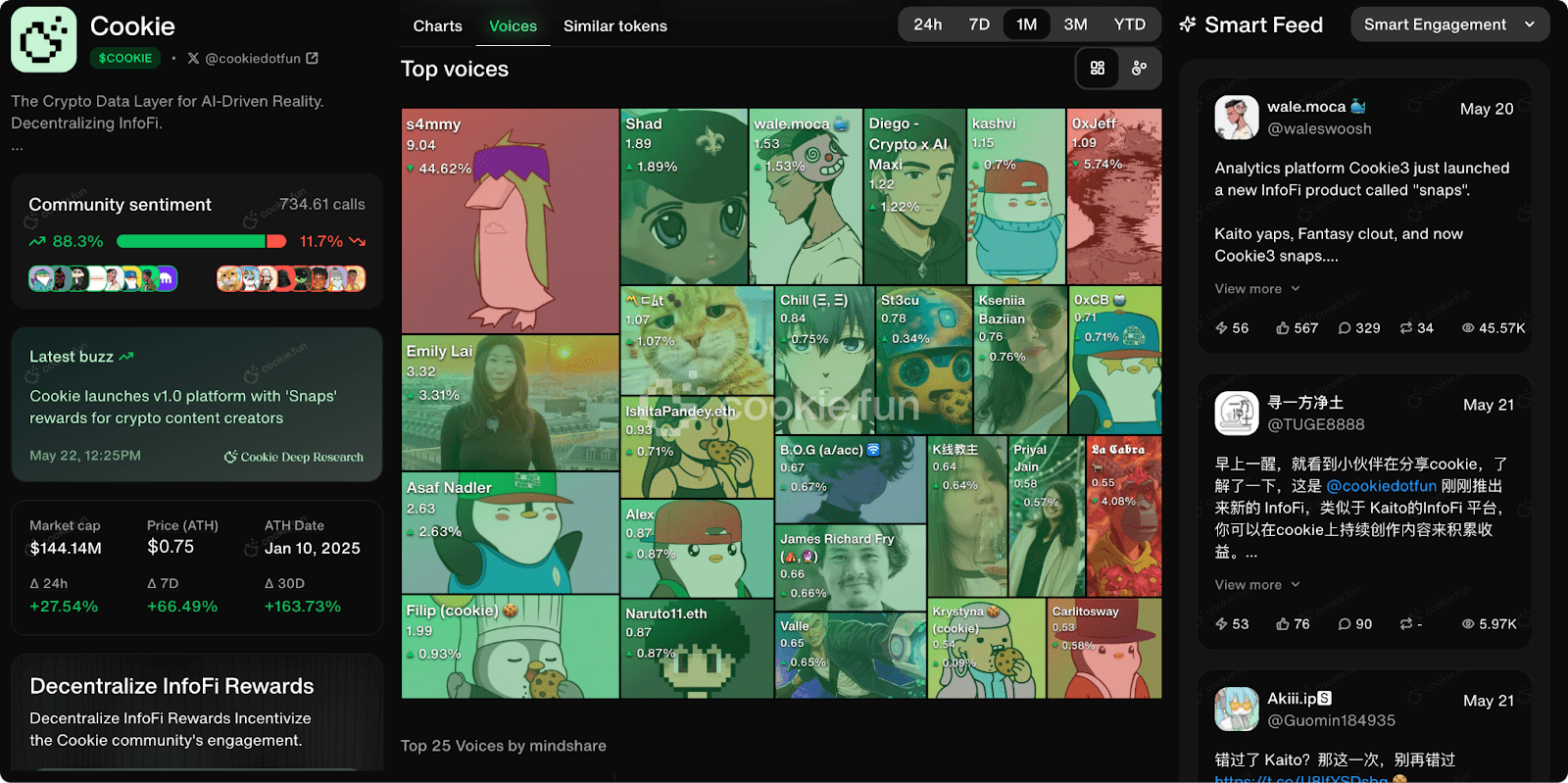
Did ordinary people actually make money?
Some did, substantially. The visible winners were just never a reliable description of the typical participant.
The Block's snapshot of the KAITO claim named several large recipients, all of whom sold quickly:
- Ansem sold his entire allocation, worth about $230,000.
- Mert Mumtaz, the Helius Labs chief executive and second-largest claimant, sold 80% of roughly $340,000.
- Anthony Sassano divested all of an allocation worth around $185,000.
Selling a reward establishes nothing improper. People who perform compensated work may reasonably want to realise the compensation, and saying so is not an accusation.
Set those against the same report's finding that around 70% of claimants received under 50 tokens, and the shape of the thing becomes clear. This was a contest, and contests concentrate.
The arithmetic is the part that got lost. A fixed reward pool does not grow because more people enter it, so more competition means a smaller expected share. A large points balance guarantees neither eligibility, nor a valuable token, nor payment on any particular date.
The arithmetic of a contest is not the arithmetic of a wage.
No defensible universal figure for InfoFi earnings exists in the evidence reviewed here. Campaign totals, token valuations and screenshots of individual payouts cannot produce a median hourly return, and anybody quoting one is guessing.
The emotional split follows from that. Someone who found an audience and got paid saw opportunity. Someone spending hours chasing a moving threshold saw precarious piecework. A reader outside both groups just wanted their replies back. All three can be right at once without making every participant a spammer or every critic an enemy of creators.
What the X ban actually changed
The immediate point of control was the API, the software connection through which outside services reach platform data. X revoked it for the affected apps, and the products died at the socket rather than in the market.
Kaito moved to end Yaps and its incentivised leaderboards. Cookie announced the closure of Snaps. These were shutdowns of particular products, not proof that either organisation had stopped operating.
Both of those are dated fully diluted valuations rather than a live quote, and the second was taken during the day's sell-off, with the token down around 14.5% on the announcement.
X was not banning crypto. A developer at the company subsequently reiterated support for other crypto and Web3 uses of the API, and X maintains a separate paid partnerships policy with its own disclosure requirements. Critics fairly noted that X itself attaches financial incentives to creator engagement. That is a real tension, but it is not a reason to pretend the products were identical.
The structural lesson was simpler than the policy argument, and it is the one worth carrying forward.
If a business needs a particular social network's data and audience, that network holds meaningful power over the business. A token cannot vote away a platform's control of its own API.

What survived, and what changed
Four businesses, four different answers. They should not be collapsed into a single "InfoFi is back" headline.
| Business | The leaderboard | Where it went |
|---|---|---|
| Kaito | Yaps | Discontinued January 2026, replaced first by Studio and then by Katalyst in July |
| Cookie | Snaps | Closed January 2026; the pitch moved to paid analytics under Cookie Pro |
| Wallchain | Quacks | Moved to curated creator selection, then went quiet after August 2026 |
| Galxe | Starboard Aura | Retired 3 August 2026, with resources moved to credentials and identity |
Kaito: from open competition to managed campaigns
Kaito's first move was Studio, which it positioned as "much closer to a tier-based traditional marketing platform". Kaito Pro and the research products were not shut down alongside Yaps, which separated the analytics business from the incentive mechanism that had become controversial.
Then came Katalyst on 29 July 2026, a reward layer paying on campaign results: mindshare, clicks, sign-ups, deposits and in-app activity. Kaito described it as "rebuilt with a better mechanism underneath and in line with platform rules", leaning on zero-knowledge verification and stated data partnerships with X.
Note what did not vanish. Mindshare is still in the list. This was never "attention bad, conversions good"; it was an attempt to make the payment mechanism configurable and auditable. Whether a measured action produces durable value is still open, because a sign-up is more concrete than a complimentary post and still does not prove anybody came back.
Cookie: the rewards closed, the analytics pitch remained
Cookie's own Snaps documentation now opens with a closure notice: "Cookie Snaps has been closed." The public direction since is Cookie Pro, combining crypto-social analytics, AI-assisted research and narrative alerts.
That supports something narrower than either "Cookie disappeared" or "the pivot worked". There is a documented direction and a live product entry point. There is no independently verified subscriber count, retention figure or evidence of profitability.
The change in emphasis is the interesting part: charging customers to interpret information is a different business from running a competition to produce more of it.
Wallchain: selection, and then silence
Wallchain is the awkward case for any tidy story about InfoFi ending in January. It did not close on cue, and it did not carry on either.
Its March recap reported "$500,000+ has been distributed to both leaderboard winners and Quack Heads NFT holders" that month, against "$1,300,000 has been distributed in 2026 so far". A leaderboard was still paying out two months after the ban that supposedly ended leaderboards.
Then it changed shape rather than stopping. Wallchain Select, announced on 26 May, matches creators to campaigns by who their audience is rather than how large it is, using social-graph analysis across a claimed 3.3 million X creators. The pitch is blunt about what it replaces: "You don't compete on follower count anymore." A creator with 5,000 followers who reaches DeFi users, it argues, should beat a 100,000-follower account whose audience came for NFTs.
Wallchain's own framing of that shift is the most candid sentence any of these companies produced about the era. It calls Select "the next chapter", and says of the one before it that "leaderboards" taught the company "what creates real value". The open contest is described, by a company that ran one, as a completed phase.
The work carried on into the summer. A case study published on 3 August 2026 described an 18-creator campaign for the prediction market Prophet, claiming more than 2,000 new users at a cost per acquisition under $5, with a third campaign said to be running as it went out. Those were company-reported figures in a sales document, never a reconciled audit.
That post is also the last public activity this article could verify, and what followed it is worth recording. Wallchain's documentation subdomain no longer resolves at all. The main company account its own blog links to, @wallchain_xyz, now returns a 404, though a second Wallchain account is still there. The website and the Quacks app still answer, from behind a challenge screen that gives nothing away.
No closure has been announced anywhere this article could find, and no filing or statement establishes that the company has stopped. What can be said is narrower and stranger: the most visible parts of Wallchain went quiet after early August, without anybody saying so.
A curated model may fix some problems of an open contest. It also quietly changes the original promise. When a platform picks who gets a campaign, access is no longer the same thing as everyone competing in public.
Galxe: an actual retirement, with a date
Galxe supplies the cleanest ending. Starboard stopped on 3 August 2026. Dashboards remain viewable but "all data is now frozen. Tracking and indexing have stopped."
For unfinished distributions, Galxe passed campaign data to the project teams: "Each project will handle their own reward distribution and post their own announcements going forward." Quest, Passport, Loyalty Points, Smart Balance and the Rewards Hub "continue to operate as normal."
Galxe gave its own reason, a shift toward "real user acquisition, retention, credentials, and identity at scale", and did not attribute the August decision to January's announcement. A frozen leaderboard is not a live leaderboard, and the retirement of Starboard is not the retirement of Galxe.
The useful idea, after the noise
There is a detail worth recording before it disappears entirely. Kaito's documentation for Yaps, the pages that defined how tokenised attention was supposed to work, now returns a 404. Wallchain's scoring documentation has gone the same way, and its whole docs subdomain no longer resolves. The era's primary descriptions of itself are vanishing from the live web faster than the companies that wrote them are explaining why.
That is not sinister. Companies retire docs for retired products. But it does mean the mechanism that reorganised Crypto Twitter for a year is already becoming harder to check, which is a reason to write it down properly rather than argue about it from memory.
Product announcements establish what a team announced. They do not establish audited adoption, revenue or retention, and none of the figures from Cookie3 or Wallchain here have been independently reconciled.
The token figures are two dated fully diluted valuations, February 2025 and January 2026. Neither is a live price, and the early allocation data is a distribution snapshot rather than an earnings study.
Criticism and support quoted here are documented examples, not a sentiment survey. No interviews were conducted and no outreach is claimed.
The idea underneath the meta is still worth testing. People who explain complicated products, reach overlooked communities and produce work others value should be able to get paid for it. Nothing in the last two years disproved that.
What the last two years did establish is how easily the evidence gets substituted. A campaign can demonstrate reach without demonstrating trust. A distribution can demonstrate payment without demonstrating a decent hourly return. A verified click can demonstrate an action without demonstrating demand. A working website can demonstrate a product without demonstrating a business.
The next meaningful proof is duller than a leaderboard screenshot: recurring customers, disclosed compensation, rewards actually delivered, users who come back, and evidence that a campaign created something beyond the activity it paid for.
Whether crypto can pay people to talk is settled. It can, at scale, in five languages, within five weeks.
The open question is whether the information is still worth reading when nobody is being paid to produce it.

What Is $QENIS? Inside the Solana Meme's First Five Days
Qenis existed as an AI character before the contract. Five days later, $QENIS had thousands of traders, creator-linked economics, and an unfinished control story.

How $microduck Turned a $399 Robot Into an NVIDIA Narrative
A real robot supplied the character. Reports of an NVIDIA deal supplied the storyline. An unofficial token on Robinhood Chain brought the two together.

fomo Built the Feed for the Memecoin Machine
fomo turns public wallets, leaderboards and referrals into a single scroll. Its rise shows the next memecoin fight is over discovery, not creation.