What Is $NIULAI? The 342-Yuan Movie That Became a Market
A Chinese animated film made 342 yuan on opening day. Nine days later the internet turned that failure into a joke, and the joke into a market worth millions.
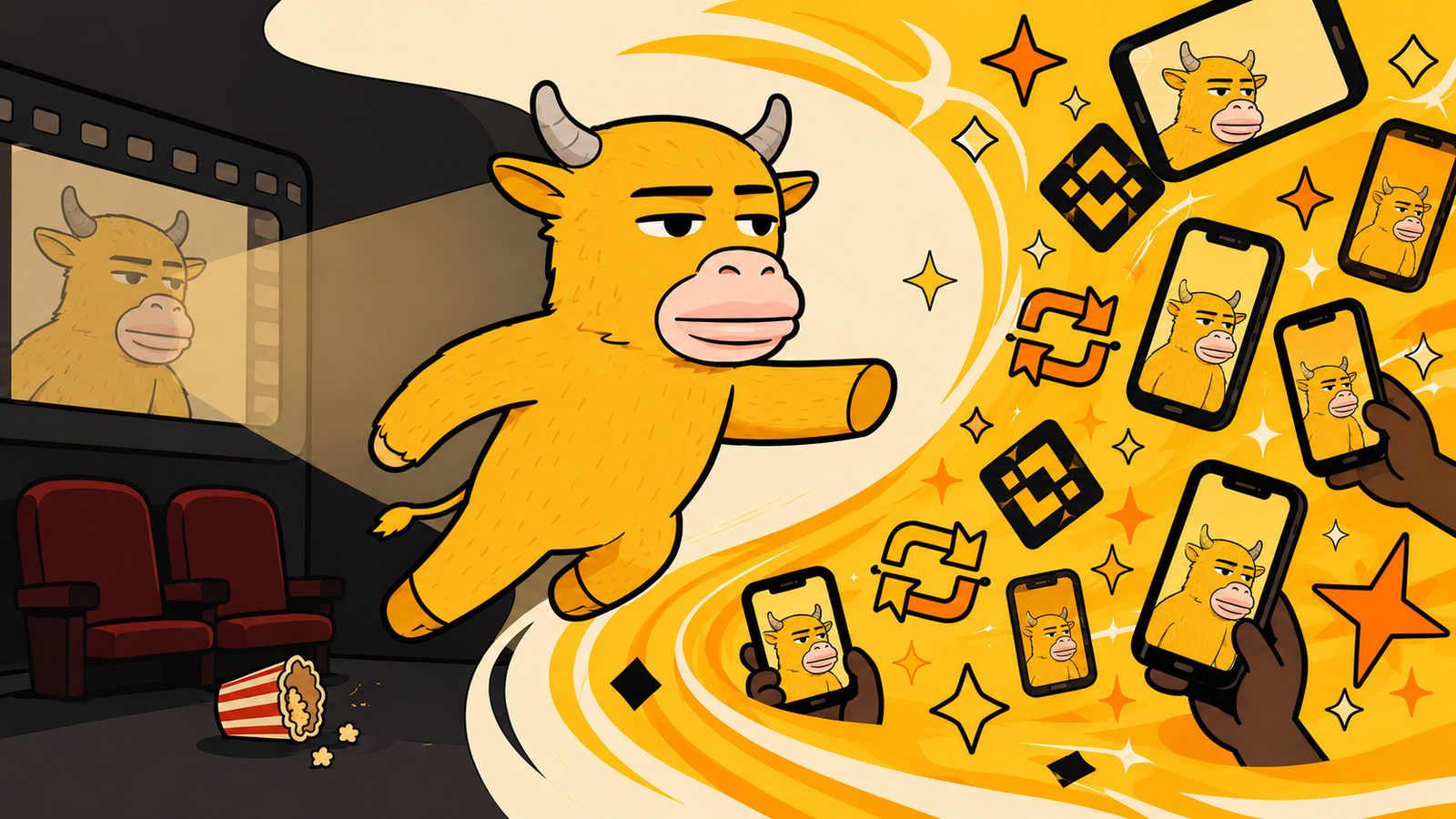
On its opening day, the Chinese animated film 牛来 sold 342 yuan of tickets. Not 342,000. Three hundred and forty-two, about the price of a few seats. After nine days in cinemas it had taken 7,169 yuan in total, from 236 people. It was on course to disappear before most of the country knew it existed.
Then people started buying tickets precisely because nobody had.
By the evening of August 15, Niu Lai had passed 1.3 million yuan. Cinemas had scheduled 1,991 screenings in a single day, and more than 18,600 people turned up for them. Somewhere inside that reversal, a token appeared on BNB Chain carrying the film's name, and was worth millions of dollars within days.
The interesting part is not the market capitalisation, which has moved repeatedly since this piece was reported and will have moved again by the time you read it. It is that about seventy-two hours separated "nobody is watching this" from "there is a multimillion-dollar market named after it."
The failure was the advertisement
Nothing about Niu Lai was engineered to go viral. That was the point.
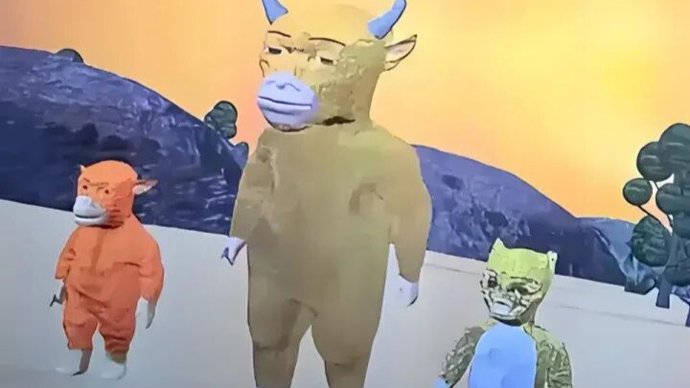
Clips began circulating of its low-detail 3D models, stiff animation and oddly earnest dialogue. On August 14, a joke about the film failing to clear even 10,000 yuan reached Weibo's trending topics. From there the audience did what audiences now do with anything sufficiently strange: they remixed it. Posters for other summer releases were re-cut as Niu Lai versions. Scenes became reaction material. Viewers started asking cinemas to add screenings so they could take part.
Beijing News documented moviegoers travelling long distances to attend. One audience reportedly laughed the whole way through.
At that point the product had changed function. People were not buying tickets expecting a good animated film. They were buying tickets to be in the room where everyone else was laughing, photograph it, and make the next layer of the joke. The crowd had rewritten what the movie was for.

Before the token, there were two people and a very strange film
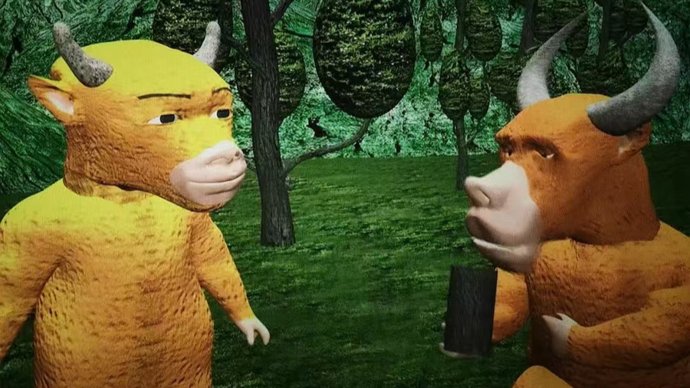
The 86-minute film follows a calf named Niu Lai and a skylark that enters a dream and watches the calf grow through love, persistence, courage and sacrifice. Public credits list two core creators: director Xin Yumeng and writer Sun Lifang, who also performed voice roles. Reporting on the production says Xin handled much of the modelling, animation, editing and production himself.
It was not a cash grab assembled last month. The project was filed in 2021 and later received a public screening licence. Its production company, Dalian Jingyuan Culture Film and Television Media Co., operated as a decoration business before changing its name and business scope in 2021. Corporate records reporting says Xin owns it.
None of that is what made it a meme. The gap between how the film was presented and how it actually looked did. Promotional material suggested a polished Chinese-style animated feature; the screenshots did not match. That contrast is enormously remixable, because it can be communicated in a single image to someone who knows nothing about the plot.
This matters for one reason: the culture existed, in full, before any token did.
The token arrived while the joke was still forming
The BNB Chain contract behind the breakout is 0xbeea1d618e533a387d941f58a7d4c9b7bd377777.
Flap, the launch platform it appears on, records its creation as August 13, 2026 at 03:59:30, a time it displays without stating a timezone, with a creator wallet of 0x6af3...679e and a supply of 1 billion. There is no project description attached. Who controls that wallet could not be established from any public source reviewed for this piece.
The timing is the detail worth holding onto. The token was not created months later, once Niu Lai was settled internet lore. It was created during the handover, after the film had started circulating as a curiosity but before the August 14 and 15 wave that filled cinemas. By August 15, crypto accounts were posting the contract address directly alongside clips from the movie, using the absurdity of the film as the token's entire pitch.
There is also a translation layer that is easy to misread. The native onchain symbol is 牛来. LBank opened NIULAI/USDT trading at 08:00 UTC on August 15 and stated plainly that it renamed the ticker because its platform cannot display Chinese characters. $NIULAI is an exchange convenience, not the token's name.
The Chinese name then picked up a second life it was never designed for. 牛来 reads roughly as "the bull is coming," so Chinese-language crypto posters adopted it as a market joke. The film contains nothing about cryptocurrency. The pun was found, not planted.
What the market did in one afternoon
Odaily, citing GMGN, put the token above $3.4 million early on August 15, then above $6 million, then through $10 million, and, on the publication's own 15:21 timestamp, briefly above $14 million before it slipped back to roughly $13.78 million. It has traded higher since.
Those four figures are one reading from Flap at about 15:49 UTC on August 15, taken hours after the run described above and already superseded. Every number in this article is a timestamped observation, not a property of the project. A three-day-old token can produce completely different statistics between one check and the next, and the retrace is as much a part of the record as the run.
What survives the volatility is the sequence. An obscure film became a national joke, and a market formed around its name fast enough to add and shed millions of dollars before the cultural event had even finished happening.
Nobody has shown that the filmmakers agreed to any of this
This is where the story stops being fun and starts requiring care.
Nothing reviewed for this article establishes that Xin Yumeng, Sun Lifang, their production company, the film's distributor or any other documented rights holder created, authorised or endorsed the BNB Chain token. Nothing establishes that they receive revenue from it. Nothing establishes any relationship between them and the anonymous deployer.
Unestablished, in both directions. No authorisation, licence or endorsement has been shown, so calling this the official Niu Lai token is unsupported. Equally, the filmmakers have not publicly objected as far as we can find. Silence is not consent, and it is not a dispute either.
The gap matters more than usual here, because 牛来 does not identify a unique asset. At least two separate Solana tokens using the same name were live during the same viral cycle, on different mints, with far smaller markets. The meme can be copied in seconds. Legitimacy cannot.
The film has a crowd. The token has holders.
There is no shortage of evidence for a Niu Lai crowd. It has remixes, parody posters, lines repeated outside the film, viewers organising screenings, and a live argument about whether the whole phenomenon is terrible filmmaking, admirable independent persistence, collective absurdism, or all three at once.
What is much harder to demonstrate, three days in, is a $NIULAI crowd.
Almost everything identifiably about the token so far is market capitalisation, contract sharing and speculation. That is an audience, not a community. There may well be artists, translators, moderators and recurring contributors forming around it right now, and there may eventually be spaces that run independently of whoever deployed it. On August 15 the evidence is not there to say so.
So the honest description is narrow: the movie supplied the character and the absurdity, the internet supplied the reinterpretation, and crypto supplied a market. Whether the token adds a fourth layer that outlives the joke has not happened yet.
What this actually shows
Most memecoins have to manufacture a story before anyone cares. $NIULAI skipped that step by attaching itself to one that was being written in public, in real time.
A strange film no longer has to become a durable meme before someone builds a market on it. The market can arrive while people are still deciding what the joke means.
That compression is the genuinely new thing here, and it is worth documenting even if the token is worthless in a month. The film opened on August 5 and played to almost nobody for a week. The contract was created on August 13. The joke peaked on August 14. By August 15 cinemas were adding screenings, the box office had crossed seven figures in yuan, the token had already run through eight figures, and an exchange had translated its ticker for an international audience.
None of that says anything about whether the token lasts. It says a great deal about how little distance now sits between an internet joke and a financial market built on top of it.
The question worth returning to is not where the price goes. It is whether anything is still here when the weekend ends.
Who controls wallet 0x6af3...679e. Which account first connected the film to this specific contract. Any authorisation, licence or revenue relationship involving the filmmakers. Whether a token-specific community exists apart from traders and promoters. Which social accounts, if any, speak for the token with authority. Whether the BNB Chain version stays the dominant 牛来 as competing contracts circulate. These are gaps in the reporting, not evidence of the opposite.

fomo Built the Feed for the Memecoin Machine
fomo turns public wallets, leaderboards and referrals into a single scroll. Its rise shows the next memecoin fight is over discovery, not creation.
Ansem.io Is Not Just a Launchpad. It Is a Market for Ansem's Attention
Ansem's new Solana platform borrows pump.fun for the launch, then sells the thing it actually owns: his audience, priced in burns, airdrops and a leaderboard.


Hyperliquid Built the Market Washington Could No Longer Ignore
US regulators spent years telling onchain derivatives venues to register or leave. Hyperliquid became too important to ignore.