Before the GTA 6 Leak, $CYBERLEEK Was Already Trading
The Solana token traded for nearly three quiet days before QR-coded GTA 6 footage handed it an audience. The bots got there before the crowd did.

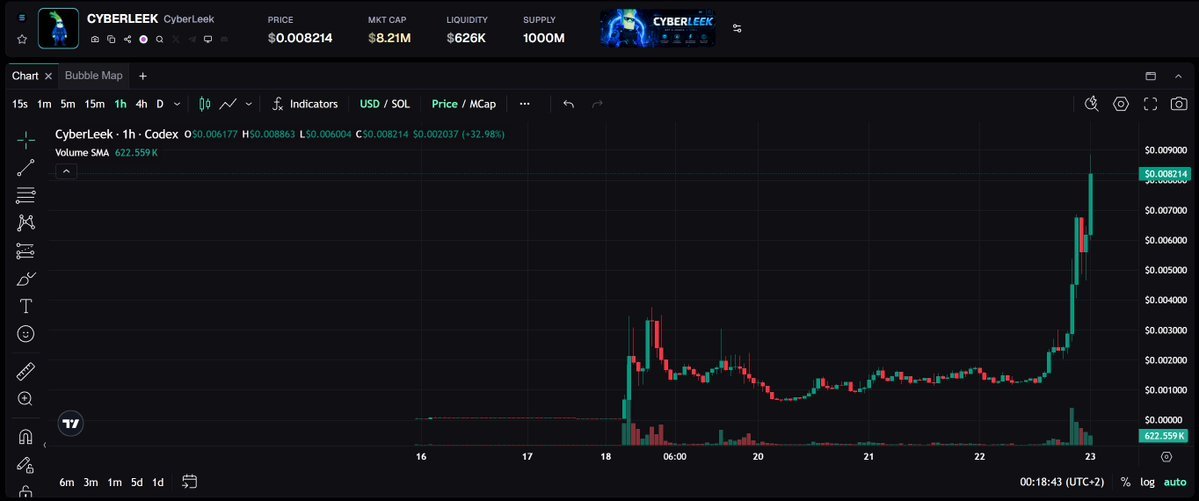
At 17:00 UTC on 18 August, $CYBERLEEK was 68 hours old and almost nobody was trading it.
Hourly volume across those three days had run as low as four dollars. The implied valuation drifted somewhere between $55,000 and $77,000, which on Solana is less a market than a listing.
Then apparent Grand Theft Auto VI footage appeared, carrying Cyberleek branding and QR codes burned into the watermark. The 17:00 candle ran roughly 13 times on $1.47 million of volume. The next hour added $5.47 million, and by 23:00 UTC the token's implied valuation had touched $3.3 million.
- 14 Aug: the name is registered
- 15 Aug: the token starts trading
- 18 Aug: the footage arrives with the QR code inside it
- 18 Aug, 17:48: the first bots are in
The version of this story that travelled fastest starts with a hacker and ends with a memecoin. Somebody obtained unreleased GTA 6 material, posted it, then bolted a token onto the spectacle.
The chronology runs the other way. The name came first, the token second, the leak third. The footage did not give $CYBERLEEK a theme, it gave it an audience, and Bitquery's reconstruction of the onchain record titles the whole affair accordingly: the leak was a token launch.
That much has become the consensus reading in a week. What the same records show underneath it is stranger, and less flattering to the operator. Cyberleek built an attention machine and then lost control of almost every part of it. Automated traders took the first money out. Arbitrage bots farmed the gap between its own two liquidity pools. Four other contracts took the ticker. A federal subpoena is now reaching into the Discord servers where its audience talked. The one asset the campaign still holds is the next clip, and Rockstar starts giving that away on 27 August.
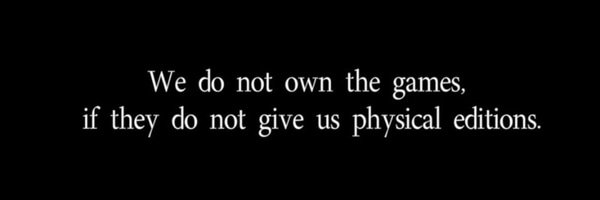
The coin came first
An Arweave naming record matching Cyberleek's later branding was bought on 14 August at 18:30 UTC for 13,878 ARIO. At that point the name meant nothing to anybody.
The contract that the footage would later advertise recorded its first trade at 21:07 UTC the following day, through a Raydium pool, opening at a fully diluted valuation of roughly $55,000.
Just after midnight on 16 August an X account posted the contract with a reference to a "330 sol burn". A second account repeated it 13 minutes later. Neither post travelled anywhere.
Then very little happened for three days, which is the part of this story that does the most work.
- 14 August. An Arweave name matching Cyberleek's later branding is registered for 13,878 ARIO.
- 15 August. The contract at the centre of the campaign trades for the first time, at roughly $55,000 fully diluted.
- 16 August. Two X accounts announce it within 13 minutes of each other. Almost nobody notices.
- 18 August. Apparent GTA 6 footage appears carrying Cyberleek branding and token QR codes. The first buying wave starts inside the hour.
- 19 August. Stop Killing Games publicly repudiates the campaign.
- 20 August. Take-Two files for DMCA subpoenas in the Southern District of New York, seeking records from Microsoft and Discord.
- 21 August. Cyberleek's site adds an advertising rate card. Bitquery publishes its reconstruction of the first wave.
- 22 August. Roughly 270 million tokens are burned, described in the next leak's watermark as all of the developer supply.
- 23 August. The reduced-supply token sets an all-time high while the website returns a 502 error and the main Telegram channel is reportedly removed for copyright infringement.
Read down that list and the campaign stops looking like a hacker who found a way to monetise a scoop. It looks like a product with a launch date.
The order is documented. A name, then a tradeable market, then footage that advertised both. Bitquery reconstructed that sequence from public Solana and Arweave records, and anyone with a block explorer can check it.
Who is a different question. Bitquery says plainly that the deployer wallet and the wallets holding the launch supply remain the open question, and that none of the biggest winners traced back to the deployer.
Timestamps cannot show that one person registered the name, launched the token and obtained the game material. They show only that all three were ready before the audience arrived, which is enough to describe a campaign and not enough to name anyone in it.

A persona, not an identity
Cyberleek is best described as an unidentified person or group operating a shared name.
The footage appears to demonstrate access to a playable GTA 6 build, or at least a playable portion of one. One clip reportedly contained a song released in January 2025, which points to a relatively recent build. None of that establishes how the material was obtained: whether Rockstar was breached directly, whether an insider supplied it, or whether it passed through other hands first.
The distinction matters because "hacker" has become part of the branding while the access route remains unknown. Leaker is the defensible word, and it is the one this piece uses.
In September 2022, early GTA 6 development footage was taken during a network intrusion associated with a member of the Lapsus$ group. Rockstar later told a UK court the incident cost around $5 million and thousands of hours of staff time.
Nothing in the public record connects Cyberleek to that breach.
What the earlier case did supply was a costume that already fitted. GTA 6 had become a game whose development was inseparable from leaks, security failures and fan investigation, so an anonymous account claiming build access in 2026 arrived pre-legitimised by four years of precedent. The genuinely new component was the liquid market standing next to it.
What the campaign was actually selling
$CYBERLEEK grants nothing documented. Not access to software, not governance, not ownership of anything, not a recorded share of revenue.
What it offered was a scoreboard bolted to a serial. Polls let the audience choose which clip came next. Later messages tied releases to market-cap milestones, and the pitch eventually compressed itself into a slogan: higher marketcap, more leaks.
- The price rises
- Cyberleek reads it as demand
- another clip is released
- the attention comes back to the token
Read in that direction, the token is not a claim on anything. It is a signal the operator agreed to respond to, which is a real mechanism and a very cheap one: it costs nothing to promise more of what you already have.
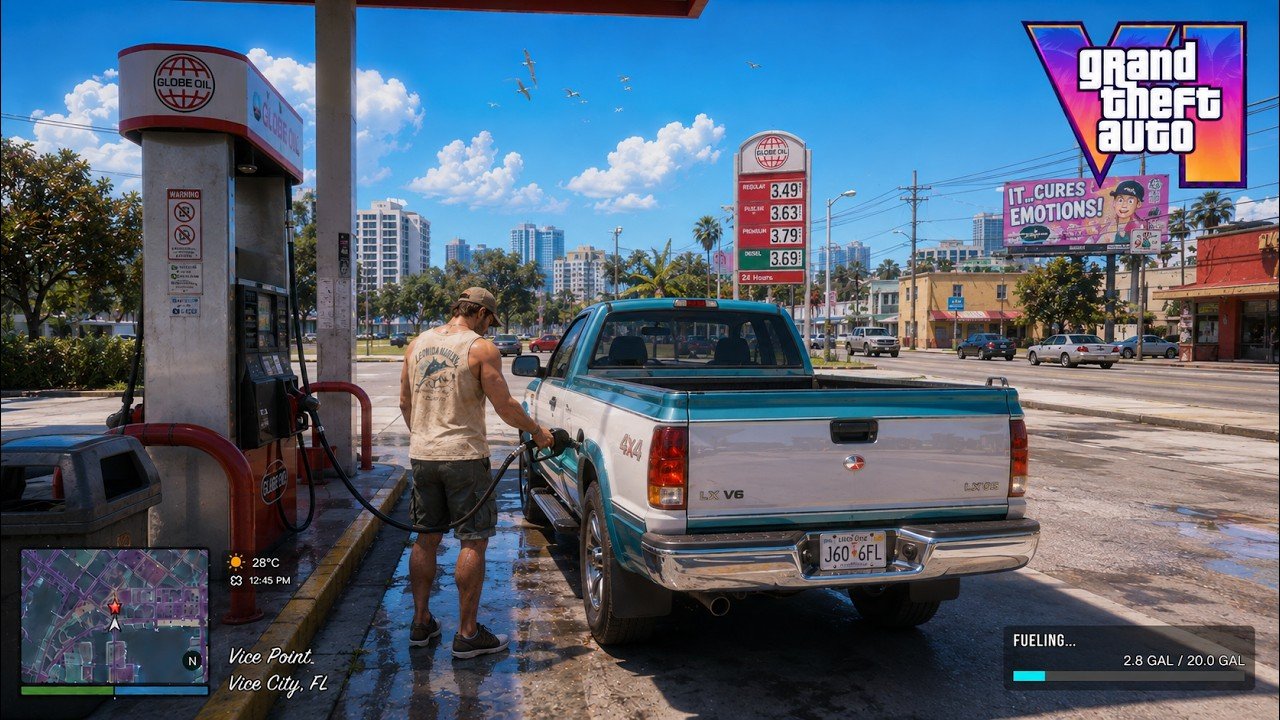
Around it the campaign built a moral frame. Its manifesto attacks publishers for selling revocable licences as purchases, shipping unfinished live-service games, charging for content already sitting in the base files, and letting single-player games die when servers close. Three demands carry it:
- No digital preorders before release and independent review, on the grounds that a digital copy cannot sell out, so the preorder's only benefit to the buyer has already gone. Physical preorders stay permitted.
- No paid unlocks for single-player content already contained in the files the buyer paid for.
- Mandatory offline fallback modes so a single-player game outlives its servers.
Those are real arguments, and they were already being made by people who did not need a token to make them. The manifesto says Cyberleek is "raising funds for a secret project" whose specifics cannot yet be revealed, and adds: "Let it be absolutely clear: this is not a cash grab."
Stop Killing Games, the established campaign whose demands overlap most closely, wanted none of it. On 19 August its director general, Moritz Katzner, told supporters: "Do not send these people your money, no matter how much sympathy you may feel for their actions."
The language was borrowed. The permission was not.
Cyberleek was selling the next clip. The fastest money in the room was selling the six minutes before anybody else understood what they were looking at.
The first money went to machines
The people who found Cyberleek culturally compelling were not the people who got paid first.
Bitquery ranked wallets by realised profit across the opening wave. The five largest all made their first purchase between 17:48:26 and 17:54:02 UTC, a window of five and a half minutes, and took roughly $158,000 out between them.
| Wallet | First buy (UTC) | Spent | Sold | Realised | Trades |
|---|---|---|---|---|---|
tAg2...SXdtB |
17:48:26 | $138,000 | $187,000 | $48,706 | 713 |
kai5...r5Ya |
17:48:43 | $2,771 | $37,428 | $34,657 | 112 |
HmBP...mXois |
17:54:02 | $4,688 | $29,759 | $25,072 | 9 |
71CB...Sxy4t |
17:50:43 | $9,673 | $34,652 | $24,979 | 25 |
J6oZ...MLb9h |
17:50:53 | $35,936 | $60,166 | $24,229 | 280 |
Nine trades in one row, 713 in another. That spread is the interesting part: this was not one strategy arriving, it was several unrelated machines noticing the same thing at once.
Their funding says more than their profits. Two were topped up through the Axiom trading terminal's router, one of them eight times in the hours before the leak. One pooled 69 SOL from three of its own sub-wallets at 16:57:27, about three minutes before the hour that changed everything. One had received exactly 1,000 SOL from an exchange-withdrawal address on 4 August, two weeks before there was a token to spend it on.
That last transfer predates the token, the footage and the public persona, so it is not evidence of foreknowledge. It is evidence of a funded wallet waiting for something to happen.
Bitquery's categories are behavioural. They describe transaction patterns, not people. Routing through Axiom means a trader used a popular Solana terminal, not that Axiom or its operators knew anything about the campaign.
A wallet cluster proves that assets moved between addresses. It does not prove that one person controls them, and it does not establish intent.
The three wallets that looked worst turned out to be the dullest. Each appeared to have been handed free supply, which is the classic insider signature. All three were arbitrage bots, running atomic swaps between the token's two pools inside single transactions.
Because by then there were two pools. A Meteora pool opened at 17:54:12, ten seconds after the last of the five biggest winners made its first purchase, and turned over $1.14 million in three days. Much of that was attributed to bots buying in one venue and selling in the other. Who seeded it has not been established.
Cyberleek controlled what was released and when. It controlled nothing about the market that assembled around it, and the second pool is the cleanest illustration: a piece of infrastructure whose only purpose was to harvest the difference between two prices the campaign itself had created.
Across seven days the main pool did $22.7 million of volume through 163,014 trades and 16,182 distinct wallets. That is a genuine crowd by any memecoin standard. It is also, so far, a crowd that arrived to trade.
Four other contracts wore the same ticker
By 21 August four additional Solana tokens were trading under the same ticker, turning over about $1.63 million between them, the largest at $713,000 and the smallest at $200,000. None of them was the contract in Cyberleek's own footage.
The contract promoted alongside the campaign is ApZuxdpzMrbEYTGEzeY9afh5pj9d6qPRJCTgQYiipbKg, and that is the token this article describes. The symbol alone identifies nothing.
"Official" needs its own qualification. That contract is official only in the narrow sense that the Cyberleek campaign advertised it, and an endorsement is worth what the endorser is worth. Nobody has established who that is.
Copycats are not a side effect of an event coin. They are the same race. A ticker can be cloned in minutes, while an audience moving at the speed of a leak rarely stops to work out which contract came first.
The burn bought a second act
By 20 August the opening wave had cooled. The token was well off its first peak, hourly volume had thinned, and the conversation had drifted away from the clips towards the legal hunt and the operator's revenue.
Then the supply changed.
On 22 August roughly 270 million tokens were burned, about 27 percent of the original billion. The watermark on the next leak explained why, and gave away rather more than it meant to: "To prove you wrong all dev tokens were just burned, now only collecting trading fees."
That sentence is the campaign describing its own business model in passing. A burn proves one narrow thing: those units cannot be sold. It does not touch the fee stream, and it does not say where money raised for the secret project sits, who receives liquidity and trading revenue, or who held the rest of the launch supply.
Trackers now report about 730 million tokens against the original billion, which corroborates the size of the burn. The description of them as the complete developer allocation remains a claim by the only party in a position to make it.
Those are CoinGecko's figures at 17:53 UTC on 23 August, and the range on market capitalisation is not false modesty: the page was rewriting itself while it was being read. The token set an all-time high of $0.03436 earlier the same day, after the burn rather than during the leak that started all this.
The subpoena reaches past Cyberleek
On 20 August Take-Two filed for DMCA subpoenas in the Southern District of New York, seeking records from Microsoft and Discord with a 4 September production deadline. The stated purpose was "to obtain the identity of an alleged infringer or infringers", and the company said the information would only be used to protect its rights.
These are identification subpoenas. Nobody has been arrested, and nobody has been criminally charged.
What they ask for is wide. From Microsoft: account records tied to the persona, registration and last-login IP addresses, phone numbers, linked Google and Xbox connections, device identifiers, the company's own internal investigative files, and GTA-related content held in OneDrive accounts. From Discord: identifying information for users across several named servers, covering everything from 1 June 2026 onwards.
That second list is the part worth sitting with. One of the named servers belongs to the editors of a GTA content creator, and the request covers people who talked in those servers rather than only whoever ran the persona. An event coin creates a latency market, where the fastest reader of a social feed gets paid. A leak with a token attached creates a legal one, and its blast radius includes the audience.
Monetisation, meanwhile, stopped being implicit. On 21 August the site added an advertising offer: placements and custom footage, with 400 XMR, then worth roughly $162,000 to $165,000, required merely to open a private negotiation. The final price would be separate.
By 23 August one remaining mirror of the site was returning a 502 error and the main Telegram distribution channel had reportedly been removed for copyright infringement. Neither means the operation is finished. Both mean that Cyberleek's ability to keep publishing now depends on infrastructure it does not own.
What happens when the leaks stop
Rockstar's official extended look at GTA 6 arrives on 27 August, with the game scheduled for 19 November. Every hour of official footage makes an unofficial clip worth less, and nothing Cyberleek can release will beat the publisher's own trailer for quality.
That is a deadline nobody in this market set for themselves.
The New Acts question is never whether a token can hold a price. It is whether anything here survives the thing that made it. Take the leaks out and count what remains: a large number of wallets that traded, a poll, a manifesto borrowed from a movement that publicly disowned it, and a fee stream pointing at an address nobody has identified. Poll participation is not governance. Watching a subpoena is not contributing to a project.
Nearly every function of this project still routes back through one dependency, and it is not a community.
- Cyberleek has to keep possessing material the internet has not already seen.
- The channels have to stay online, which is now partly other companies' decision.
- The audience has to keep believing the next release matters.
- The legal chase has to stay interesting without ending the operation.
The burn removed 270 million tokens. It removed none of that.
There is a version of this that turns into something: a persistent community around game preservation, an archive, contributors who stay after the spectacle. It would be the first memecoin to manage it starting from a copyright claim, and it would need people who are here for the argument rather than the reveal.
The first date to check is 27 August, when Rockstar makes scarcity obsolete for a week. The second is 4 September, when Microsoft and Discord are due to produce records. The formal thirty-day review falls on 22 September, and the question then will not be the chart.
It will be whether anybody is still in the tent once there is nothing left to show them.
The $65 Million Blokyz NFT Raffle That Took Over X
More than 25,000 ETH queued for 7,500 Blokyz NFTs worth 225 ETH. Most of it was refundable, and the queue itself became the product everyone could see.
Hyperliquid Built the Market Washington Could No Longer Ignore
US regulators spent years telling onchain derivatives venues to register or leave. Hyperliquid became too important to ignore.
Robinhood Built a Chain for Stocks. The Internet Gave It a Cat.
Robinhood Chain launched to put equities onchain. Memecoins arrived first and supplied its mascot, its launchpads and most of its early liquidity.
